
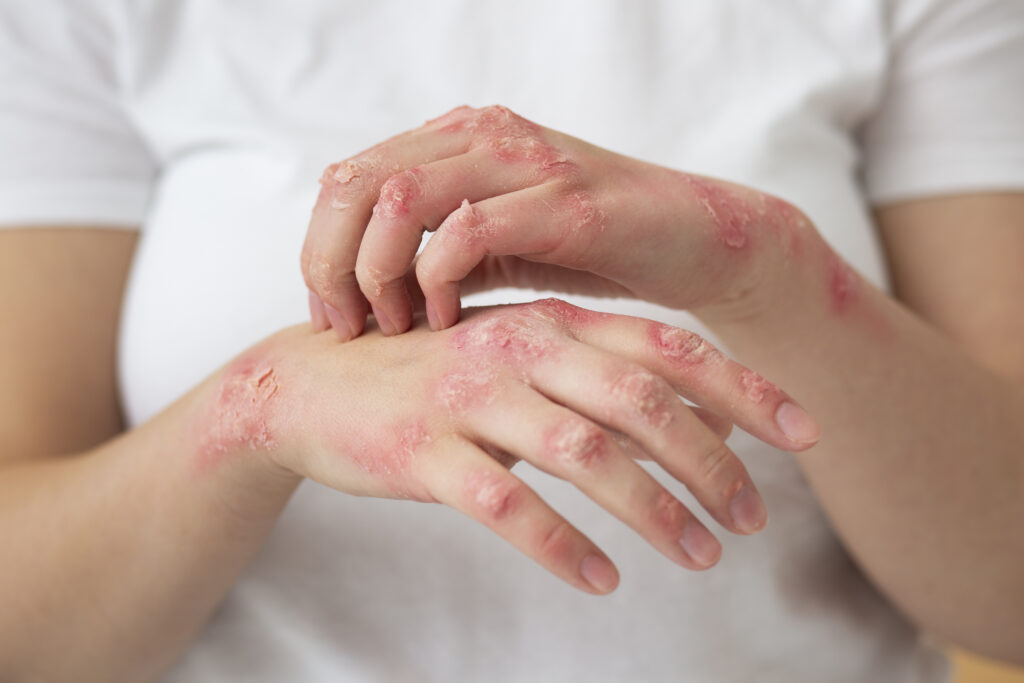
Eczema
Introduction
Eczema is a condition that causes your skin to become dry, itchy and bumpy. This condition weakens your skin’s barrier function, which is responsible for helping your skin retain moisture and protecting your body from outside elements.
- It’s a type of dermatitis, which is a group of conditions that can inflame or irritate your skin. The most common type is atopic dermatitis or atopic eczema. “Atopic” means that you’re more likely to get allergic conditions such as asthma and hay fever.
- Atopic dermatitis is long lasting (chronic) and tends to flare sometimes. It can be irritating but it’s not contagious.
- Most people can manage their symptoms by getting treatment and by avoiding irritants, things that can affect your skin when you come into contact with them.
- Extreme itchiness is the most common symptom of eczema, and scratching that itch only makes it worse.
Types of Eczema
There are several types of eczema. Each type has unique triggers that can affect your skin’s barrier function, including:
- Atopic dermatitis : This is the most common form, and it affects more than 7% of American adults. Other allergic disorders, such as asthma and hay fever, can trigger it. It often starts in childhood.
- Contact dermatitis : Nearly everyone gets this at some point in their lives. It happens when your skin comes into contact with something that causes a rash. The trigger can cause irritation or an allergic reaction. Triggers are unique to each person and vary depending on the type of contact dermatitis. Contact dermatitis has two main types:
- Irritant dermatitis : It is the more common kind and is more closely linked to people with atopic dermatitis. Triggers may include skin care products, soaps and detergents, jewelry made with nickel, and industrial chemicals such as solvents and cement.
- Allergic dermatitis : It flares when your skin comes into contact with something you’re allergic to. Common allergens include poison ivy, nickel and other metals, fragrances and beauty products with fragrances, rubber, latex, and the preservative thimerosal. For some people, it takes sunlight to cause a reaction.
- Dyshidrotic eczema : This is a less common but more challenging form of eczema. It causes outbreaks of tiny blisters on the palms of the hands, soles of the feet, and sides of the fingers. Sweat or irritants such as metals may trigger it.
- Neurodermatitis : This type of eczema tends to cause just one or two intensely itchy patches, often on the back of your neck, arm, or leg. Risk factors include having another form of eczema, such as atopic or contact dermatitis, or just very dry skin. Some mental health issues, including anxiety disorder and obsessive-compulsive disorder (OCD), can also trigger it. Those assigned female at birth (AFAB) between the ages of 30 and 50 have a higher chance of getting it than other people.
- Nummular eczema : This coin-shaped eczema often appears after a skin injury such as a burn or insect bite. You’re more likely to get nummular eczema if you or your family members have atopic dermatitis, allergies, or asthma.
- Seborrheic dermatitis : This happens in areas of your body with lots of oil glands. When it’s on your scalp, it’s called dandruff. It shares a common link with some other skin conditions, such as psoriasis, acne, and rosacea, as well as a variety of other diseases.
- Status dermatitis : This type happens in people who have poor blood flow, usually in their lower legs. Unlike some other types of eczema, these plaques don’t mean you have abnormal genes. Some lifestyle habits raise the risk too, such as being overweight or not getting enough physical activity.
- It’s possible to have more than one type of eczema at the same time.
Causes
Experts aren’t sure what exactly causes eczema. Things that may make it more likely include:
- An immune response to something irritating.
- Problems in your skin’s barrier that let moisture out and germs in.
- A family history of other allergies or asthma.
Eczema triggers
Some people have flare-ups in response to specific things, such as:
- Pollen
- Rough or coarse fabrics or clothing (such as wool)
- Feeling too hot or cold
- Household products such as soap or detergent
- Dander from animal hair or fur
- Dust mites or mold
- Infections or colds (including skin infections)
- StressHeat and sweat
- Cold and dry air
- Fragrances or tobacco smoke
- Irritating chemicals
- Certain foods (including peanuts, dairy, and eggs)
Symptoms
Eczema symptoms can appear anywhere on the body and vary widely from person to person. They may include:
- Dry, cracked skin
- Itchiness (pruritus)
- Rash on swollen skin that varies in color depending on your skin color
- Small, raised bumps, on brown or Black skin
- Oozing and crusting
- Thickened skin
- Darkening of the skin around the eyes
- Raw, sensitive skin from scratching
Eczema rash :
One of the first signs of eczema is a rash that looks different on different individuals. For those with darker
skin, the rash can be purple, brown, or gray. out you have a light skin tone, the rash can look pink, red, or purple.
The most common places where you’ll notice symptoms of eczema include on your:
- Hands
- Neck
- Elbows
- Ankles
- Knees
- FeetFace, especially cheeks
- In and around ears and lips
While less common, eczema can also occur on your:
- Nipples
- Breasts
- Folds of skin near your vagina (vulva)
- Penis
Risk factors
Stress and genes are among the most common risk factors for getting eczema. But there are more, including:
- Having very dry skin
- Using hair care or skin products with certain allergens
- Food allergiesLiving in cold, damp areas or swampy, hot areas
- Having someone in your family who has eczema
Complications
Complications of atopic dermatitis (eczema) may include:
- Asthma and hay fever : Many people with atopic dermatitis develop asthma and hay fever. This can happen before or after developing atopic dermatitis.
- Food allergies : People with atopic dermatitis often develop food allergies. One of the main symptoms of this condition is hives (urticaria).
- Chronic itchy, scaly skin : A skin condition called neurodermatitis (lichen simplex chronicus) starts with a patch of itchy skin. You scratch the area, which provides only temporary relief. Scratching actually makes the skin itchier because it activates the nerve fibers in your skin. Over time, you may scratch out of habit. This condition can cause the affected skin to become discolored, thick and leathery.
- Patches of skin that’s darker or lighter than the surrounding area : This complication after the rash has healed is called post-inflammatory hyperpigmentation or hypopigmentation. It’s more common in people with brown or Black skin. It might take several months for the discoloration to fade.
- Skin infections : Repeated scratching that breaks the skin can cause open sores and cracks. These increase the risk of infection from bacteria and viruses. These skin infections can spread and become life-threatening.
- Irritant hand dermatitis : This especially affects people whose hands are often wet and exposed to harsh soaps, detergents and disinfectant at work.
- Allergic contact dermatitis : This condition is common in people with atopic dermatitis. Allergic contact dermatitis is an itchy rash caused by touching substances you’re allergic to. The color of the rash varies depending on your skin color.
- Sleep problems : The itchiness of atopic dermatitis can interfere with sleep.
- Mental health conditions : Atopic dermatitis is associated with depression and anxiety. This may be related to the constant itching and sleep problems common among people with atopic dermatitis.
Diagnosis
A healthcare provider will diagnose eczema after a physical exam, where they can take a close look at your skin. Most often, people receive an eczema diagnosis as a child, as it’s common among children, but a diagnosis can happen at any age when symptoms arise.
- Symptoms of eczema can look similar to other conditions. Your provider might offer tests to rule out other conditions and confirm your diagnosis. Tests could include:
- An allergy test.
- Blood tests to check for causes of the rash that might be unrelated to dermatitis.
- A skin biopsy to distinguish one type of dermatitis from another.
Treatment
Eczema treatment aims to ease and prevent itching, which can lead to infection. Treatment for eczema could include:
- Using gentle or sensitive skin moisturizers throughout the day when you have dry skin. Apply moisturizer when your skin is damp after a bath or shower.
- Apply topical medications to your skin as advised by your provider, like topical steroids.
- Take oral medications like anti-inflammatory medicines, antihistamines or corticosteroids to reduce itchiness and swelling.
- Immunosuppressant drugs help regulate how your immune system functions.
- Light therapy to improve the appearance of your skin and remove blemishes.
- Avoid triggers that cause symptoms of eczema to flare up.
Prevention
Developing a basic skin care routine may help prevent eczema flares. The following tips may help reduce the drying effects of bathing:
- Moisturize your skin at least twice a day : Creams, ointments, shea butter and lotions seal in moisture. Choose a product or products that work well for you. Ideally, the best one for you will be safe, effective, affordable and unscented.Using petroleum jelly on your baby’s skin may help prevent development of atopic dermatitis.
- Take a daily bath or shower : Use warm, rather than hot, water and limit your bath or shower to about 10 minutes.
- Use a gentle, non-soap cleanser : Choose a cleanser that’s free of dyes, alcohols and fragrance. For young children, you usually need only warm water to get them clean — no soap or bubble bath needed. Soap can be especially irritating to the skin of young children. For people of any age, deodorant soaps and antibacterial soaps can remove too much of the skin’s natural oils and dry the skin. Don’t scrub the skin with a washcloth or loofah.
- Pat dry : After bathing, gently pat the skin with a soft towel. Apply moisturizer while your skin is still damp (within three minutes).

No Comments